


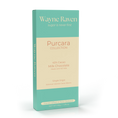


- Weight: 50g / 1.76 oz
- Recyclable Packaging
Tasting Notes
Tasting Notes
Rich chocolate notes, to underling notes of honey, hazelnut and toffee. A deep rounded finish.
Sweetness Profile
Sweetness Profile
- Gentle
- Moderate
- Rich
- Sweet
Cacao Intensity
Cacao Intensity
- Subtle
- Mild
- Bold
- Intense
Nutrition Information
Nutrition Information
- Ingredients: Cacao solids 45% (Cocoa butter & Cacao beans), Whole milk solids, Cane sugar, Soy lecithin 0.5%.
Allergen Information
Allergen Information
- Allergens: Milk, Soy
- May Contain: Tree Nuts, Hazelnuts, Walnuts, Peanuts, Almonds, Cashews, Egg, Sesame, Lupin, Gluten, Wheat, Oats.
New Zealand Dairy
Full Cream Milk
Chocolate Makers
From Raw Ingredients to Chocolate
Handcrafted in NZ
Every Bar Is Handmade
Solomon Islands Cacao Beans
Ethically Sourced Beans
Cocoa Butter
Pure Cocoa Butter
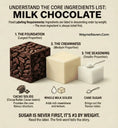
Sugar Is Never First
Listed At #3 By Weight
-
ROUNDED CACAO FLAVOUR
-
BALANCED TASTING
-
A LINGERING FINISH
Chocolate shouldn't feel like a letdown
- Forgettable chocolate is no fun.
- Don't accept disappointment.
- You were designed for better.


Enjoy milk chocolate with more depth, character, and balanced sweetness
-
FEEL A SMOOTH, CLEAN MELT
A clean, satisfying texture helps this bar feel fuller across the palate and more complete from beginning to end.
-
TASTE MORE IN EVERY BITE
This bar is designed to bring a little more depth and presence while still feeling smooth and approachable.
-
ENJOY BALANCED SWEETNESS
Where sugar enhances the cacao flavour, letting the notes shine through, helping the bar feel more composed and steady across the palate.
Wayne doesn't just care about chocolate.
He cares about you.
🍫 Chocolate Maker Since 2019 - always refining for balanced flavour.
⭐ #1 Customer Choice - 35% Matcha White Chocolate at Auckland Chocolate & Coffee Festival 2025 - with strong feedback across the range.
⚖️ Sugar Is Never First ™ - it's listed as the third ingredient by weight - it's treated like seasoning.


YOU CAN BE SOMEONE WHO TRULY APPRECIATES CACAO FORWARD CHOCOLATE
Darker milk chocolate built on a foundation of cocoa butter and cacao beans, where sugar is always #3.
 Auckland, NZ
This rich smooth flavor is not too sweet or bitter making it balanced. It leaves long lasting rich flavor making it more tasty.
-
Auckland, NZ
Cocoa is the star of this chocolate. It has really nice chocolate taste makes people want to eat more.

Questions You Might Have Before Trying This Milk Chocolate
You are considering Purcara against what you currently spend on chocolate, and asking whether the difference will actually be something you taste, or something you have to be told about. For someone who makes considered choices, spending more only makes sense when what comes back is proportionately better. Not marginally. Noticeably.
The chocolate cost in this milk chocolate sits in few specific places that translate directly into what you will experience. The first is the premium quality cocoa butter, present in quantity because it is responsible for the clean melt quality that gives the honey and hazelnut notes in Purcara the time they need to develop.
The second is the cacao beans themselves. Solomon Islands origin, seven day fermentation in volcanic soils, and then air freighted to New Zealand to preserve what the fermentation built. That is not a supply chain credential, it is the explanation of where the rounded depth in the finish comes from. The New Zealand chocolate bar you are holding carries cacao that was grown, fermented, and transported with a level of care that produces the particular character you are about to taste.
The question of whether expensive chocolate is worth it for someone who has been looking for the sweet spot between milk and dark has a specific answer in Purcara. The price went into producing precisely the thing you have been looking for, not as a general quality claim, but as the cost of the specific New Zealand milk chocolate character that sits exactly where you need it.
The chocolate bar in your hands may answer the price question before you finish the first square. The honey note arrives midway through the melt. The hazelnut develops. The deep, rounded finish settles in. The cost is in the experience. You will know immediately whether it was worth it.
Imagine tasting Purcara and finding that the honey note is there, genuinely there, in the middle of the melt, not obscured by something too sweet sitting in front of it. The hazelnut arrives in the finish with room to be noticed. The chocolate sweetness taste is present and integrated, completing the profile rather than leading it. That is what the recipe was structured to produce.
For someone who has moved past bars where sweetness felt like the whole experience. You're looking for complexity. The structure of a recipe matters as much as the percentage. In Purcara, cane sugar sits third by weight. The full cream milk carries its own natural sweetness through lactose, which means it is already contributing to the profile before the added sugar plays any role. The cane sugar functions as a finishing note around the cacao depth, calibrating rather than crowding.
The question of why is chocolate so sweet can have a structural answer: sometimes a recipe's sweetness is doing too much of the work in the formula, for example, leaving less room for an ingredient like cacao to do its most interesting work. Purcara priority. The cacao and cocoa butter lead. The whole milk dairy character follows. You’ll see, cane sugar arrives where it belongs, third by weight on the ingredient list, working around complexity rather than over it.
The result may be the milky chocolate experience you have been looking for without realising the recipe structure. The chocolate flavour in Purcara, honey developing through the melt, hazelnut and toffee finding their way into the finish, has the space those notes need because the sweetness was deliberately placed to give it to them.
That version of the tasting, where the depth has full room, may be exactly what you were imagining when you were drawn to this milk chocolate bar.
Have you ever arrived at a product that delivered exactly what you wanted, and then found the sourcing behind it did not say much the level of thought you put into your own choices? The product was right. The story behind it was less so.
The sourcing behind Purcara was built with the same intentionality as the bar itself was.
The cacao beans come from named farming families in the Solomon Islands. Communities are paid a premium price above the commodity market price on the same day of purchasing these cacao beans, using calibrated scales to guarantee accurate weights. That final detail is specific and meaningful: calibrated scales mean the payment reflects exactly what was grown, not an approximate number. It is the difference between a transaction structured around the farmer's fair return. For someone who pays attention to how things are done, that distinction may carry weight.
There are no certification logos on the packaging, for example, like fair trade or rain forest alliance. Certifications like these tend to show up more in industrial scale sourcing, and its one way to show ethical sourcing, but it's not the only way. In our case, what fair trade chocolate means in practice here is direct relationships and the actual payment structure, the premium payment that reaches farming communities. The cocoa beans behind Purcara come from an origin with transparent sourcing that holds up at every point: named people, named places, and a payment model built around fair compensation for our farmers.
The New Zealand full cream milk is sourced through a local New Zealand dairy business. The cacao bean varieties are predominantly Amelonado, which were chosen because they produce the particular rounded depth that makes Purcara sit where it sits in the range. Every sourcing decision was made around quality ingredients and integrity rather than if we went with convenience and cost reduction.
The considered approach you bring to what you eat and drink extends, in this case, all the way back through the supply chain. The sourcing reflects the same standard as the bar. That may be exactly the kind of alignment you were looking for in a milk chocolate.
Your concern is a reasonable one to bring to a 45% cacao milk bar. Higher percentages tend to reduce creaminess and increase bitterness, and you have been on the wrong side of that line often enough to know that depth and intensity are not the same thing. You want depth. You have no interest in intensity for its own sake.
The assumption that 45% necessarily tips toward the dry and sharp end does not apply to Purcara. The reason is the specific character of the cacao, and that character is what makes the difference between depth and edge.
When you're comparing dark chocolate vs milk chocolate in terms of genuine complexity, the cacao variety matters more than the percentage alone. The Solomon Islands cacao milk chocolate blend in Purcara is predominantly Amelonado, a variety whose character is rounded and malty rather than sharp and tannic. The depth you will find in this bar, the honey midway through the melt, the hazelnut in the finish, comes from the cacao milk character of that origin, not from the bitterness that makes some higher percentage bars feel demanding.
Whether dark chocolate is better than dark milk chocolate for you, looking for genuine complexity without intensity is exactly the question Purcara sits at the centre of. The New Zealand full cream milk in the recipe keeps the experience from tipping into the dry territory. What remains may feel like exactly the sweet spot you were looking for:
Opening
Rich cocoa milk chocolate warmth, present without sharpness.
Midway
Honey and hazelnut developing, the depth that darker milk chocolate bars reach.
Finish
Deep, rounded, toffee note settling. Stays without sharpness. The balance you came for, held all the way through.
This is the milk chocolate bar that sits exactly between the two experiences that have both fallen short for you. Not because it compromises, but because it was built for precisely this position.
Open the wrapper. Before you take the first square, consider what you would want to hear from someone who has already been where you are. Not someone reviewing a bar for notes of exotic fruit. Someone who brought the same standard you bring: not too sweet, not too bitter, balanced, the depth worth returning to.
Among the best chocolate brands at this level, the ones worth a considered palate's attention are the ones where the reviews describe the experience rather than just the occasion. These two people found Purcara and said what they actually found:
"This rich smooth flavour is not too sweet or bitter making it balanced. It leaves long lasting rich flavour making it more tasty."
★★★★★ Asami M · Auckland, NZ
"Not too sweet or bitter, balanced, long lasting" the precise balance you've been looking for, described by someone who found it.
"Cocoa is the star of this chocolate. It has really nice chocolate taste makes people want to eat more."
★★★★★ Sabrina L · Auckland, NZ
"Cocoa is the star" the cacao doing its best work, carrying the experience rather than being covered by sweetness.
Both describe what a considered palate finds when the artisan chocolate craft behind the bar does its job without compromise. "Not too sweet or bitter, balanced, long lasting" is as precise a description of the sweet spot you’ve been looking for as a review can offer. "Cocoa is the star" confirms that the depth you wanted, the honey and hazelnut working through the melt, was noticed and named.
These are New Zealand chocolate bars made by a chocolate maker whose cacao beans and cocoa butter from NZ, the sourcing reflects the same standards as the milk chocolate bar that is produced. The palate confirmation you needed before committing is in those two responses, from people who were paying the same kind of attention you will.
You are into the clean melt. The honey has arrived, right where the notes suggested it would, and the hazelnut is developing toward the finish. The rounded depth is there, without the sharpness you were trying to avoid. And the question that follows naturally from the experience is the one a considered person always asks: where did this specific character come from?
The answer is specific. Understanding how chocolate is made from cacao beans that carry this particular rounded character begins with the origin, and the origin has a direct answer for each note you just tasted.
Purcara Origin of the character you tasted
Cacao variety
Amelonado dominant, the variety that produces rounded, malty depth rather than sharp, tannic edge. The honey and hazelnut in your finish came from this.
Farming origin
Solomon Islands volcanic soils, Akwai, Samuel, Willie, Isabella. Named farming families. The cacao bean character starts in their micro-lots.
Fermentation
7 days. The process that builds the flavour compounds, including the rounded toffee in the finish, that no subsequent stage can manufacture once it is absent.
Transit
Air freighted to New Zealand. The cacao beans arrived with the fermentation character intact rather than degraded by sea transit time.
Dairy
Whole milk from New Zealand pasture grazed dairy. The ingredient that kept the finish balanced rather than letting the cacao tip toward edge. Cocoa butter sourced locally in New Zealand.
The question of cocoa butter in chocolate at this level, present in full quantity rather than reduced, is why the melt gave the honey and hazelnut time to develop. The specific depth you found required the melt to run long enough to carry all three stages: opening richness, midpoint honey, rounded hazelnut finish.
The character you taste in this milk chocolate has a specific, traceable origin at every point. Knowing it may make the next bar feel even more worth taking time with.
There is a specific concern that comes with finding a bar that finally delivers exactly what you were looking for, the quiet worry that the label, when you read it, will introduce something that sits less well. Not a major problem. Just something mid list that makes you feel slightly less certain about coming back to it. For you who thinks carefully about what you put in your body, the label is part of the choice, not an afterthought to it.
Here is what you’ll find when you turn Purcara over:
Purcara 45% cocoa Full Ingredient Declaration
Cacao solids 45%
Cocoa butter + cacao beans. The depth, the melt, the honey and hazelnut. Leads the recipe.
Whole milk solids
NZ dairy. Second by weight. The balance that kept the depth from tipping into edge.
Cane sugar
Third by weight. Completes the profile. Does not lead it.
Soy lecithin 0.5%
Not a filler or texture enhancer. Used purely as a refining aid for the stone wheels. Nothing more. At half a percent. No presence in what you tasted.
No palm oil, No artificial flavouring, No vegetable fats, No vanilla flavouring
These are clean label ingredients in the fullest sense, not minimal as a positioning claim, but minimal because nothing more was required. The rounded depth you found in the tasting came from the cacao at 45%, the New Zealand full cream milk at position two, and the chocolate flavours that the Amelonado cacao character produced through the melt. Every element in the list earned its place by contributing directly to the experience.
This is low soy chocolate in every meaningful measure, meaning 99.5% of the bar is cacao, New Zealand milk chocolate dairy, and cane sugar. The soy lecithin at 0.5% that is all that is needed to help the chocolate bars flow through the stone refining process and nothing else. It has no effect on the balance you tasted.
The label confirms that the choice you made was as considered as the bar itself. Every ingredient was chosen intentionally. Nothing is present that does not belong. The milk chocolate you found is exactly what it says it is, and that may be the final reason it is worth coming back to.